Termite control in Folsom, CA depends on knowing which termite you have and where it is feeding. Subterranean termites live in soil and travel through mud tubes, drywood termites live inside the wood they eat, and each needs a different method. Use Call Now to describe what you found, such as mud tubes, discarded wings or pinhole-sized frass, and you will be connected with an independent provider serving 2 ZIP codes around Folsom.
Signs of termites in a house
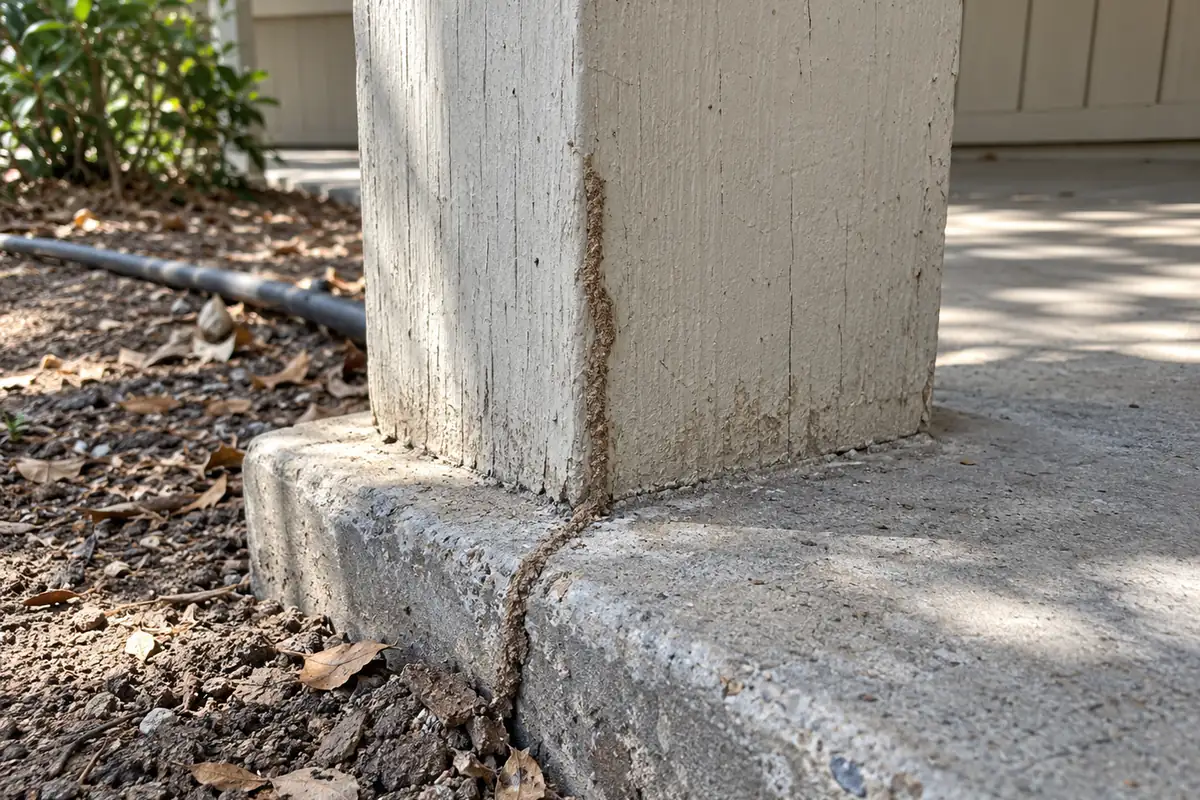
- Mud tubes: pencil-width tunnels of soil on foundation walls, piers or sill plates
- Frass: tiny six-sided wood pellets from drywood termites, kicked out of small holes
- Bubbling or buckling paint, warped doors and windows that suddenly stick, and soft spots in baseboards
- Swarmers: winged termites near windows and lights, usually in spring, and piles of shed wings
- Hollow-sounding or sagging wood that sounds papery when tapped with a screwdriver handle
Prevent termites around the house
- Store firewood, lumber and cardboard off the ground and away from the foundation
- Schedule an inspection every year, and after any flood or major plumbing leak
- Fix leaking gutters, hose bibs, AC condensate lines and irrigation spray against the wall
- Seal cracks around pipes and utility penetrations
- Keep mulch, soil and plants a few inches below siding and out of contact with wood
What a termite inspection should cover
The inspector checks the foundation perimeter, crawl space or garage slab edges, attic framing, window and door frames, decks, fence posts that touch the house, and any wood in contact with soil. Tools are a flashlight, a moisture meter and a probe.
When a home is being sold, the lender can require a wood-destroying insect report. The report notes what the inspector found and which areas could not be reached, and it makes no promise about what happens later.
Subterranean, drywood and Formosan termites
Subterranean termites nest in the ground and need moisture, so they build mud tubes to reach wood above the soil. They are the main wood-destroying insect across much of the country. Drywood termites enter through attic vents, eaves and cracks and live entirely inside dry wood, leaving frass. Formosan termites are an aggressive subterranean species found in Gulf and southeastern states, with very large colonies.
Naming the species and pointing out where it is active is the first thing a good provider does. Picking a treatment before that identification is guesswork.
What happens after treatment
Expect soil treatments and bait stations to take weeks rather than hours to work, and remember that mud tubes can remain in view after the termites have gone. Ask the provider what signs to watch for, the date of the next inspection, and which situations the written guarantee covers and which it leaves out.
Never disturb or break active mud tubes before the inspection. Photograph them instead.
Termite treatment methods compared
| Method | How it works | Typical use |
|---|---|---|
| Bait stations | Stations in the ground hold a slow-acting bait that workers carry back to the colony | Subterranean termites when soil treatment is hard, or alongside it |
| Liquid termiticide (soil trench and rod) | A treated zone in the soil around the foundation stops termites from reaching the structure | Subterranean termites around slab and crawl space foundations |
| Structural fumigation (tenting) | A gas fills the whole structure for a set time while the home is vacated | Widespread drywood termites in several areas of the house |
| Moisture and wood-to-soil fixes | Removing wood contact, repairing leaks and improving drainage | Every case, because it removes what termites need |
| Spot and localized wood treatment | Foam, dust or injected product placed into the infested wood | Small drywood infestations in accessible wood |
Questions to ask before you agree to any termite control
- How many visits are in the plan, and what happens if activity returns?
- Which products, baits or devices will you use, and where will they go?
- Who is on site, and can you show the state licence or applicator ID for the work?
- What will you write down for me: scope, exclusions, follow-up and product list?
- What will you seal, remove or fix, and what stays my job?
- What species or problem did you find, and what did you see that proves it?
How a termite control visit works, step by step
Whatever is bothering you, a sound pest visit moves through the same stages in the same sequence. Once you know that sequence, it is easy to line companies up against each other and to notice when one jumps past the inspection and identification stages.
- Inspection: the technician walks the outside first (foundation, vents, utility lines, eaves, fence lines, mulch) and then the inside (kitchen, bathrooms, garage, attic or crawl space).
- Identification: the species is named from the insect, droppings, damage or trail, because the right product and method depend on it.
- Plan: the provider explains what will be done, which products or devices will be used, and what you need to do before and after.
- Treatment or exclusion: the work is done in the places the inspection found, not by spraying every room.
- Follow-up: you get a date for the next check and a clear answer on what to report if activity returns.
What makes termite control different in Folsom
Sacramento County city by Folsom Lake and the American River with oak woodland, trails, and foothill terrain. Hot, dry summers (100 degrees and above) push ants and wasps toward irrigated yards.
Ants, yellowjackets and wasps, black widows, mosquitoes, roof rats and mice, drywood and subterranean termites, and ticks near trails are common concerns. Neighborhood names to confirm: Historic Folsom (Sutter Street), Broadstone, Empire Ranch, Lake Natoma area, Parkway. Ask any provider how these local details change the plan for your address, because a method that works in one climate or housing style can fail in another.
Termite control across Folsom and nearby cities
In Folsom, California, Pest Control Folsom serves 2 ZIP codes: 95630, 95763. Providers working in Orangevale, El Dorado Hills, Fair Oaks, Granite Bay and Citrus Heights also receive calls and requests. Each address is checked individually, which is why it helps to give your ZIP code on the call.
To get going, press Call Now at the top of any page and tell the person who answers what you found. That puts you through to an independent provider nearby, and the provider verifies your address, looks the property over and writes up the scope.
Related help in Folsom
If this is not quite your situation, these pages cover the neighboring questions: Termite Signs and Swarm Season; Commercial Pest Control; Signs of Rats vs Mice; Cockroach Control. The service area list shows every nearby city and ZIP code covered.
Termite Control in Folsom: common questions
Is termite damage covered by home insurance?
Standard homeowner insurance generally leaves out termite damage on the grounds that it can be prevented with maintenance. Go through your own policy and ask your provider which problems the treatment guarantee covers.
When is termite swarm season?
Springtime, after a warm rain, is when swarms of winged termites most often show up, with some variation between species and regions. Finding a swarm indoors points to an established colony nearby and is a good reason to book an inspection soon.
What is the difference between subterranean and drywood termites?
Soil is home to subterranean termites, which build mud tubes up to the wood. Drywood termites never leave the dry wood they infest and leave pellet-like frass instead. Because treatments are not interchangeable, identification has to come first, before any product is picked.
Can I treat termites myself?
Over-the-counter products rarely reach a whole colony. Professional soil treatments and bait systems are applied to the structure's perimeter and need equipment and label training. DIY can work for tiny, visible, drywood spots, but a proper inspection decides that.
How do I know if I have termites?
Look for mud tubes on foundation walls, discarded wings near windows, tiny wood pellets, and wood that sounds hollow when tapped. A professional inspection confirms the species and the extent, because many insects and moisture problems look similar.
How long does termite treatment last?
Soil termiticides can protect for years when the treated zone is not disturbed, and bait systems protect only while stations are maintained. Duration depends on the product, the soil, the construction and the inspections that follow. Get the guarantee terms in writing.