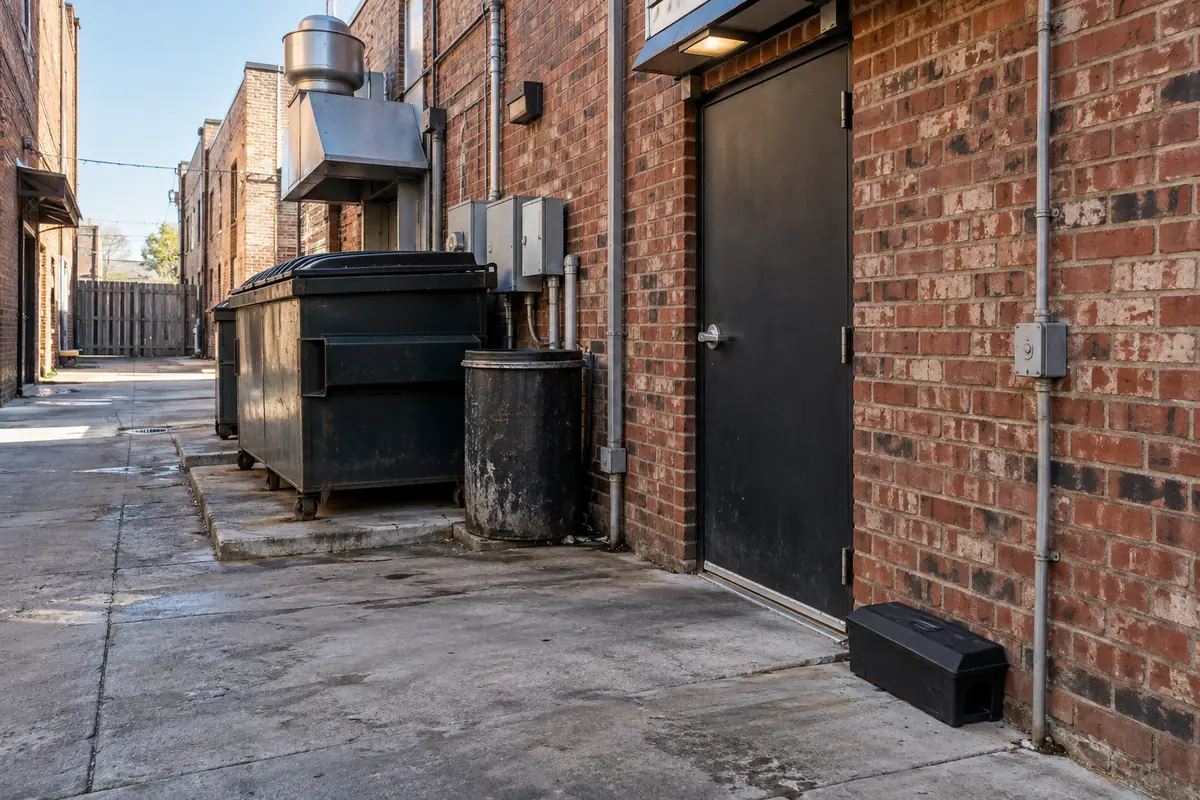
Warehouses, retail stores, offices, restaurants and multi-unit properties in Folsom, CA depend on commercial pest control that comes with written inspection records, monitoring and a plan that satisfies health codes. Use Call Now to describe the business; an independent provider serving 2 ZIP codes around Folsom will then confirm what the job covers, how the crew gets in and how often it returns to the building.
What a commercial pest program includes
- A response plan for emergency sightings between visits
- Sanitation and exclusion recommendations for the staff and facility manager
- Initial inspection and a written pest risk assessment of the whole building
- Scheduled service visits with a technician log and a service report you can keep
- Monitoring devices: glue boards, fly lights, rodent stations and insect monitors
Documentation, audits and inspections
Auditors working on food safety, along with health inspectors, usually want service reports, lists of products used and sighting logs. The provider should hand over a record after every visit that shows the areas inspected, the findings, the products applied and the repairs you are expected to make. Put all of these records in one binder or folder.
Who does what
Who does what should be spelled out in the written scope. The provider handles inspection, treatment and reporting; the business handles food storage, waste, sighting reports and structural repairs. The scope should also list areas the provider cannot reach and say who controls shared spaces, roofs and dumpsters.
Industries and their pest risks
| Business | Common pests | Focus |
|---|---|---|
| Offices and retail | Ants, rodents, spiders, occasional invaders | Entry points and waste areas. |
| Apartments and multi-unit | Cockroaches, bed bugs, rodents | Coordinated treatment across units and common areas. |
| Warehouses | Rodents, birds, stored-product pests | Loading docks, pallets, doors and pest-proofing. |
| Restaurants and kitchens | German cockroaches, flies, rodents, stored-product pests | Sanitation, drain flies, dock doors and food storage. |
How a commercial pest control visit works, step by step
Whatever is bothering you, a sound pest visit moves through the same stages in the same sequence. Once you know that sequence, it is easy to line companies up against each other and to notice when one jumps past the inspection and identification stages.
- Inspection: the technician walks the outside first (foundation, vents, utility lines, eaves, fence lines, mulch) and then the inside (kitchen, bathrooms, garage, attic or crawl space).
- Identification: the species is named from the insect, droppings, damage or trail, because the right product and method depend on it.
- Plan: the provider explains what will be done, which products or devices will be used, and what you need to do before and after.
- Treatment or exclusion: the work is done in the places the inspection found, not by spraying every room.
- Follow-up: you get a date for the next check and a clear answer on what to report if activity returns.
Questions to ask before you agree to any commercial pest control
- How many visits are in the plan, and what happens if activity returns?
- Which products, baits or devices will you use, and where will they go?
- Who is on site, and can you show the state licence or applicator ID for the work?
- What will you write down for me: scope, exclusions, follow-up and product list?
- What will you seal, remove or fix, and what stays my job?
- What species or problem did you find, and what did you see that proves it?
Prepare your Folsom home before the visit
A little preparation makes the inspection faster and the treatment more effective. None of it needs to turn the house upside down.
- Fix a dripping tap or wet spot you know about. Moisture feeds most household pests.
- Tell the provider about pets, fish tanks, asthma, pregnancy or any health concern in the home so the plan fits.
- Clear a path to the garage, water heater, under-sink cabinets, attic hatch and crawl space door.
- Write down where you saw activity, what time of day, and when it started. Take clear photos or save a sample in a sealed bag.
- Put away food, pet dishes and children's toys from the rooms being treated.
Safety for children, pets and food
Pest products are regulated. In the United States each product carries an EPA-registered label, and the label is the legal instruction for where and how it can be used. Ask the provider for the product name and the label, and keep the paperwork you are given.
Tamper-resistant bait stations keep bait away from children and pets. Gel baits go into cracks and voids, not onto open counters. Re-entry times differ by product, so ask when kitchens, play areas and pet bowls can be used again, and move toys, bowls and food before the visit.
Mistakes that make commercial pest control harder
Most failed treatments have the same few causes. They are easy to avoid once you know them.
- Judging results in a week. Many programs take two to four weeks and a follow-up to settle.
- Skipping the entry points. Without sealing, new pests replace the old ones.
- Mixing products. Overlapping chemicals can reduce results and add risk.
- Spraying store-bought products around bait. Repellent sprays can make insects avoid bait they would otherwise eat.
- Treating only where you see the pest. Activity you see is usually a fraction of what is hidden in walls, voids and soil.
What makes commercial pest control different in Folsom
Sacramento County city by Folsom Lake and the American River with oak woodland, trails, and foothill terrain. Hot, dry summers (100 degrees and above) push ants and wasps toward irrigated yards.
Ants, yellowjackets and wasps, black widows, mosquitoes, roof rats and mice, drywood and subterranean termites, and ticks near trails are common concerns. Neighborhood names to confirm: Historic Folsom (Sutter Street), Broadstone, Empire Ranch, Lake Natoma area, Parkway. Ask any provider how these local details change the plan for your address, because a method that works in one climate or housing style can fail in another.
Commercial pest control across Folsom and nearby cities
In Folsom, California, Pest Control Folsom serves 2 ZIP codes: 95630, 95763. Providers working in Orangevale, El Dorado Hills, Fair Oaks, Granite Bay and Citrus Heights also receive calls and requests. Each address is checked individually, which is why it helps to give your ZIP code on the call.
To get going, press Call Now at the top of any page and tell the person who answers what you found. That puts you through to an independent provider nearby, and the provider verifies your address, looks the property over and writes up the scope.
Related help in Folsom
If this is not quite your situation, these pages cover the neighboring questions: DIY vs Professional Pest Control; How to Choose a Pest Control Company; Pest Control Calendar for Folsom: What to Expect Each Season; Are Pest Treatments Safe for Pets and Children?. The service area list shows every nearby city and ZIP code covered.
Commercial Pest Control in Folsom: common questions
What records should I keep?
Service reports, product labels, sighting logs and inspection notes. They help during audits and inspections.
Are commercial services different for landlords?
The landlord may be responsible for common areas, roofs and shared utilities. Settle who authorizes the work and who pays before the visit takes place.
Who is responsible for sanitation?
Expect the provider to advise and treat, and the business to take care of sanitation, waste and the repair of structural gaps.
How often does a business need pest control?
Many food businesses need monthly or more frequent visits. Offices and retail are often monthly or quarterly. The right schedule depends on risk and regulations.
What if pests are reported by a customer?
Tell the provider straight away and record the sighting, so that a service call can follow.
Can pest control happen after hours?
To avoid disruption, plenty of providers work outside business hours. Ask how access and alarms will be handled.